Jumping hurts, running hurts, burpees hurt, your knees ache, your back complains, and your ankles scream. So you stop, sit on the couch, and tell yourself you will start when you feel better, but that day never comes. Here is the truth: there is no need to jump around, run, or make a pounding effort to become fit because a low impact workout works just as well, builds strength, burns fat, gets your heart pumping, and protects your joints.
This guide shows you the best low impact workouts. For beginners. No equipment needed for weight loss. For anyone who wants to move without pain. Let us get into it.
What Is a Low Impact Workout?
Low impact means one foot stays on the ground at all times. No jumping. No pounding. No harsh landings. Your joints stay happy.
That does not mean easy. You can still sweat. You can still raise your heart rate. Muscle building is still possible. Low impact is to be gentle with your body but do not spare it. Think walking, swimming, cycling, yoga and strength training. These are all low impact. They work your body without the wear and tear.
A low impact workout suits many people. Beginners. Older adults. People with joint pain. People recovering from injury. Pregnant women. Anyone who wants to stay active without pain.
Read More: Best Workout Routines for Beginners: Home and Gym Guide
Best Low Impact Workouts
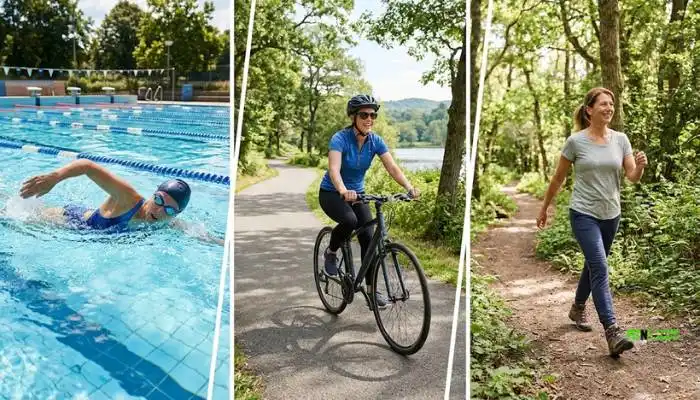
Here are the best options. Pick what works for you.
1. Walking
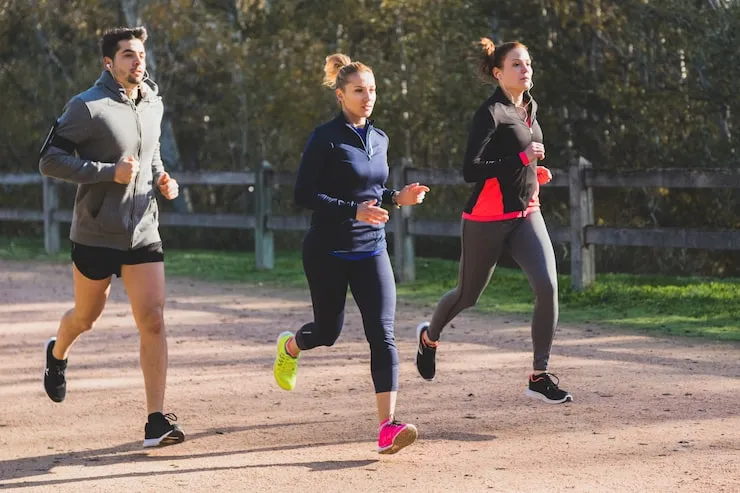
- The simplest workout there is. You just walk. Outside. On a treadmill. Around your house. It costs nothing.
- Walking works your legs. It gets your heart rate up. It clears your mind. You can do it anywhere. You can do it with a friend. You can do it while listening to a podcast.
How to make it harder: Walk faster. Walk up hills. Add a weighted vest. Swing your arms more.
2. Swimming
- Water takes the weight off your joints. You float. You move. You get a full body workout. Swimming works your arms. Your back. Your core. Your legs. All without impact.
- Swimming suits people with knee pain. Back pain. Arthritis. It is gentle but effective.
How to make it harder: Swim faster. Add more laps. Use a kickboard. Try different strokes.
3. Cycling
- Riding a bike is low impact. Your feet stay on the pedals. Your knees do not take a beating. Stationary bikes work too. Outdoor bikes work too.
- Cycling builds leg strength. It boosts your heart health. It burns calories. You can do it for hours without pain.
How to make it harder: Pedal faster. Increase resistance. Take hills. Go longer.
4. Elliptical Trainer
- If you have gym access, the elliptical is great. Your feet never leave the pedals. It mimics running without the impact.
- The elliptical works your whole body. Push with your legs. Pull with your arms. It gets your heart rate up fast.
How to make it harder: Increase resistance. Go faster. Use the arm handles more.
5. Strength Training
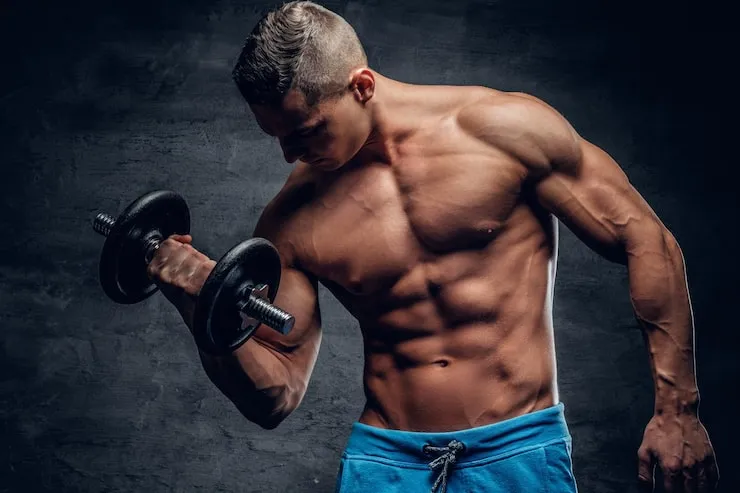
- Lifting weights is low impact. You stand still. You lift. You lower. No jumping. No running.
- Strength training builds muscle. Muscle burns fat. It protects your bones. It keeps you strong as you age. You can use machines. Dumbbells, resistance bands. Even your body weight all low impact and effective.
How to make it harder: Add weight. Add reps. Add sets. Slow down the movement.
6. Yoga
- Yoga is low impact. You move through poses. You hold them. You breathe. It builds flexibility. Balance. Core strength. It calms your mind.
- Yoga suits everyone. Beginners. Athletes. Older adults. It meets you where you are.
How to make it harder: Try power yoga. Hold poses longer. Flow faster.
7. Pilates
- Pilates focuses on your core. It is low impact. It is controlled. It builds strength without strain.
- You do it on a mat or a machine. Mat pilates works at home. It hits your abs. Your back. Your hips. Your whole body.
How to make it harder: Add props. Add reps. Try the reformer machine.
8. Rowing
- A rowing machine gives you a full body workout. Legs. Core. Arms. Back. All at once. And it is low impact.
- You sit. You pull. Your joints stay safe. Your heart rate rises. Your muscles work.
How to make it harder: Pull harder. Go faster. Add resistance.
Low Impact Workout for Beginners
Just starting? Here is a simple plan. No equipment. 20 minutes. Do it 3 times a week.
The Warm-Up (3 Minutes)
- March in place: 1 minute
- Arm circles: 1 minute
- Torso twists: 1 minute
The Workout (14 Minutes)
Do each for 40 seconds. Rest 20 seconds between. That is one round. Do 3 rounds.
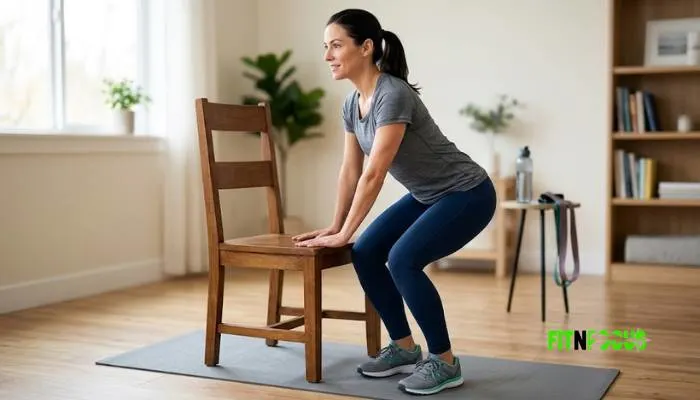
1. Sit to Stand
Sit on a chair. Stand up. Sit down. That is it. Works your legs.
2. Wall Push-Ups
Stand facing a wall. Hands on the wall. Push your body toward the wall. Push back. Works your chest and arms.
3. Marching in Place
Stand and march. Lift those knees. Swing your arms. Gets your heart rate up.
4. Glute Bridges
Lie on your back. Knees bent. Lift your hips. Squeeze your glutes. Lower down.
5. Standing Side Leg Raises
Stand behind a chair. Hold it. Lift one leg out to the side. Lower it. Switch. Works your hips.
6. Seated Knee Lifts
Sit on a chair. Lift one knee up. Lower it. Switch. Works your core and hips.
7. Standing Arm Circles
Stand. Arms out to the sides. Make circles. Small at first. Bigger. Works your shoulders.
The Cool Down (3 Minutes)
- Neck stretch: 30 seconds each side
- Shoulder stretch: 30 seconds each side
- Hamstring stretch: 30 seconds each leg
- Deep breaths: 1 minute
This low impact workout for beginners works your whole body. No jumping. No pain. Just steady progress.
Low Impact Workout No Equipment
No gear? No gym? No problem. Here is a low impact workout no equipment needed. Do it at home. In a small space. No noise. No jumping.
The Plan (20 Minutes)
Do each for 45 seconds. Rest 15 seconds. Do 3 rounds.
1. Bodyweight Squats
Stand. Lower your hips. Stand back up. Slow and controlled.
2. Incline Push-Ups
Hands on a table or counter. Push up. Easier than floor push-ups. Still works your chest.
3. Reverse Lunges
Step back. Lower your knee. Step forward. Switch legs. No jumping.
4. Plank on Knees
Get on your knees and elbows. Body straight. Hold. Works your core.
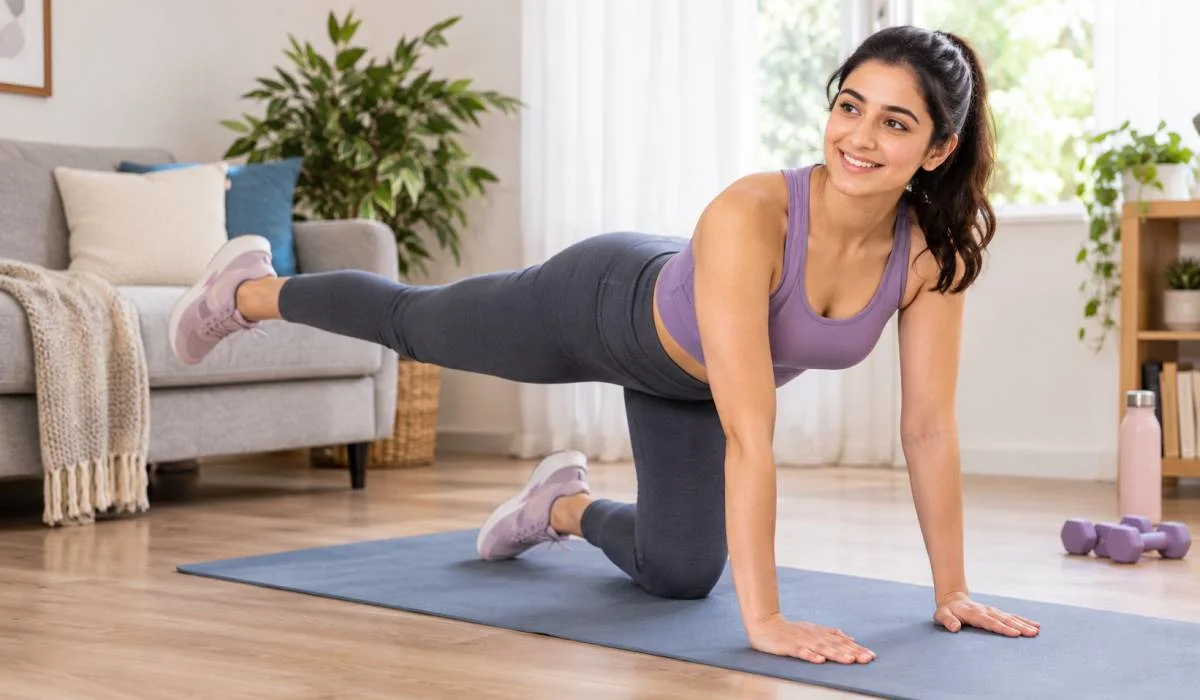
5. Bird Dog
On hands and knees. Lift right arm and left leg. Hold. Lower. Switch. Works your back and core.
6. Standing Marches
March in place. Lift your knees. Pump your arms. Gets your heart going.
7. Wall Sits
Lean against a wall. Slide down like you are sitting. Hold. Burns your legs.
8. Dead Bugs
Lie on your back. Arms up. Legs bent. Lower one arm and opposite leg. Bring them back. Switch. Works your core.
This low impact workout with no equipment works your entire body, including legs, chest, back, core, and arms, with no gear, no noise, and no impact
You May Also Read: Workout Routine for Back Pain Relief at Home: 7 Easy Exercises
Low Impact Workout for Weight Loss
Want to lose weight without hurting your body? Here is how low impact workouts help.
It Burns Calories
Walking. Cycling. Swimming. All burn calories. Maybe not as fast as running. But you can do them longer. You can do them more often. Over a week, the calories add up.
It Builds Muscle
Strength training is low impact. Muscle burns calories. Even at rest. More muscle means a faster metabolism. That means fat loss.
You Stay Consistent
High impact workouts hurt. Pain makes you skip days. Low impact does not hurt. You show up. You do the work. You see results.
Low Impact Weight Loss Plan
- Monday: Brisk walk 30 minutes
- Tuesday: Strength training 20 minutes
- Wednesday: Swimming or cycling 30 minutes
- Thursday: Strength training 20 minutes
- Friday: Brisk walk 30 minutes
- Saturday: Yoga or pilates 30 minutes
- Sunday: Rest
Pair this with healthy food, less sugar, less junk, more protein, and more vegetables to lose weight without joint pain or burnout.
Low Impact vs High Impact
Which is better? It depends.
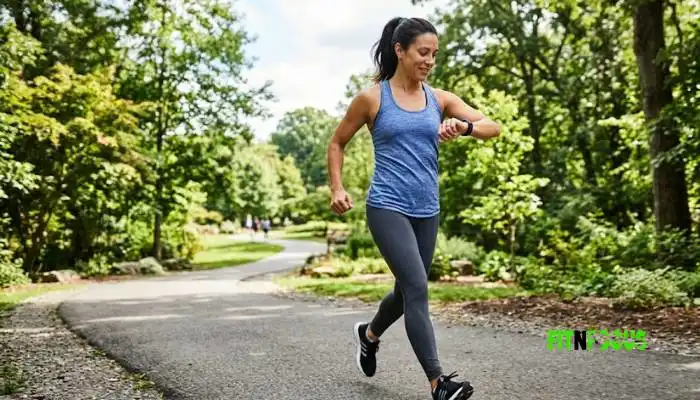
- High impact burns more calories per minute. Running burns more than walking. Jumping burns more than marching.
- Low impact is safer. Less injury. Less joint stress. You can do it longer. You can do it more often.
- Low impact suits more people. Beginners. Older adults. People with pain. Pregnant women. Anyone recovering from injury.
- The best workout is the one you do. If high impact hurts, do low impact. If low impact bores you, add some high impact. Mix it up. Listen to your body.
Tips for Low Impact Workouts
Focus on Form
Low impact is not sloppy. Move with control. Good form works the right muscles. Bad form leads to injury.
Add Intensity in Other Ways
No jumping? No problem. Go slower. Add resistance. Add reps. Add weight. Hold poses longer. There are many ways to work hard without impact.
Use Your Arms
Pump your arms when walking or marching. That raises your heart rate. It works your upper body.
Try Intervals
Walk fast for 1 minute. Walk slow for 1 minute. Repeat. That burns more calories than steady walking.
Stay Hydrated
Drink water before. During. After. Low impact still makes you sweat.
Track Your Progress
Write down what you did. How long. How you felt. Add a little each week. Progress keeps you going.
Common Mistakes
Thinking Low Impact Means Easy
It does not. You can work hard. You can sweat. You can build muscle. Low impact is about protecting joints. Not about going easy.
Skipping Strength Training
Cardio is good. But strength training builds muscle. Muscle burns fat. Do both.
Going Too Long Too Soon
Start with 20 minutes. Add 5 minutes each week. Do not jump to an hour on day one.
Ignoring Pain
Low impact should not hurt. If something hurts, stop. Adjust. See a doctor if pain continues.
Not Progressing
Doing the same thing forever gets boring. And your body adapts. Add weight. Add reps. Add time. Keep challenging yourself.
Quick Reference
| Workout | Impact | Equipment | Best For |
|---|---|---|---|
| Walking | Low | None | Everyone |
| Swimming | Low | Pool | Joint pain |
| Cycling | Low | Bike | Leg strength |
| Strength Training | Low | Weights | Muscle building |
| Yoga | Low | Mat | Flexibility |
| Pilates | Low | Mat | Core strength |
| Rowing | Low | Machine | Full body |
Final Word
You do not need to jump, run, or punish your body, a low impact workout builds strength, burns fat, protects your joints, and works for beginners, older adults, and anyone who wants to move without pain.
Start with walking, add strength training, try swimming or cycling, find what you enjoy, and do it regularly, your body will thank you, your joints will thank you, and you will feel better, look better, and move better, no impact, no pain, just results. Get started today
FAQs
Is low impact enough to get fit?
Yes. Low impact builds strength. It improves heart health. It burns fat. It works. You just have to be consistent.
What is the best low impact workout for beginners?
Walking. It is simple. It is free. It works. Start there. Add other moves later.
How often should I do low impact workouts?
3 to 5 days a week. That is a good goal. Start with 3. Build up.
Do low impact workouts build muscle?
Yes. Squats. Push-ups. Bridges. These build muscle. Add resistance bands or light weights for more.
Is walking a low impact workout?
Yes. Walking is the original low impact workout. One foot stays on the ground. No pounding. Great for everyone.
What if I have bad knees?
Low impact is perfect for bad knees. Swimming. Cycling. Walking. These are easy on the knees. Avoid jumping. Avoid running. Listen to your body.
Can I do low impact workouts every day?
Yes. Low impact is easy to recover from. But take one rest day a week. Your body needs it.
.