Getting older does not mean you stop moving. But finding exercises that are safe and easy? That can be tough. Many routines are too hard on the joints. Others require gear you do not have. And some just take too long. This is where quick fitness exercises for seniors come in.
They are simple short and they work. You do them in your living room. No gym. No expensive equipment. Just you and a chair. These moves keep your legs strong. They improve your balance. They keep your heart healthy. And they take just minutes a day. No excuses. No complicated steps. Just real results for real people over 60.
Why Daily Movement Matters Over 60?
Your body changes after 60. Muscles get smaller. Bones get weaker. Joints get stiff. That is just how it works. But here is the thing - you can slow all of that down. Daily exercise for seniors at home keeps your heart strong. It keeps your legs strong so you do not fall. It keeps your mind sharp too. Studies show moving your body helps your brain work better. You think clearer. You remember more. And you sleep deeper at night.
The best part? You do not need to kill yourself. Quick fitness exercises for seniors are enough. Ten minutes a day. Fifteen if you are feeling good. That is all it takes to see real changes.
Read More: Quick Home Workout for Women Over 30: Simple Fat Burning Moves
5 Exercises for Seniors to Do Everyday
These are the 5 exercises for seniors to do everyday. They hit every major area. Legs. Arms. Core. Balance. Do them in order. Take breaks if you need to. Go at your own pace.
1. Chair Squats
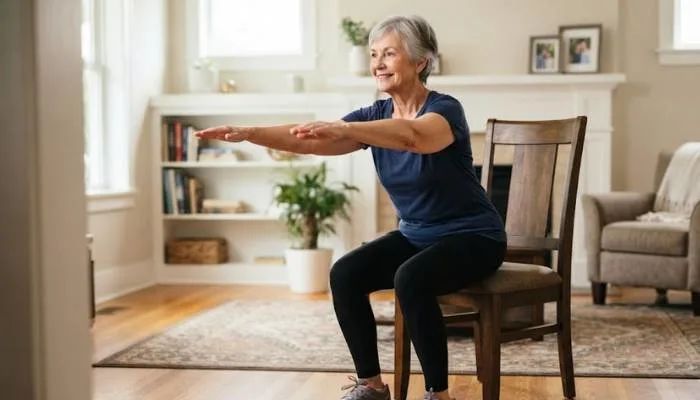
This move keeps your legs strong. Strong legs mean you can get out of a chair easily. You can walk up stairs. You can catch yourself if you trip.
How to do it:
Stand in front of a sturdy chair. Feet shoulder-width apart. Lower your hips like you are sitting down. Stop just before your butt hits the chair. Stand back up. That is one.
- Do 10 times. Rest. Do another 10.
- Make it easier: Use your hands on the armrests to push up.
- Make it harder: Do not use your hands at all.
2. Wall Push-Ups
This works your chest. Your shoulders. Your arms. It also helps with posture. Slouching is common as we age. This move pulls your shoulders back.
How to do it:
Stand facing a wall. Arms length away. Place your hands on the wall at shoulder height. Shoulder-width apart. Bend your elbows. Lean your body toward the wall. Push back to start.
- Do 10 times. Rest. Do another 10.
- Make it easier: Stand closer to the wall.
- Make it harder: Stand further from the wall.
3. Heel Raises
Balance is a big deal for seniors. Falls are dangerous. This simple move builds the muscles around your ankles. It trains your body to stay steady.
How to do it:
Stand behind a chair. Hold the back for support. Lift your heels off the floor. Stand on your toes. Hold for two seconds. Lower back down.
- Do 15 times. Rest. Do another 15.
- Make it easier: Hold the chair with both hands.
- Make it harder: Hold with one hand. Or no hands.
4. Seated Leg Lifts
This move works your hip flexors. Those get tight from sitting too much. Tight hips make walking hard. This move loosens them up.
How to do it:
Sit in a chair. Back straight. Feet flat on the floor. Straighten your right leg out in front of you. Point your toes up. Hold for two seconds. Lower down. Switch legs.
- Do 10 on each leg. Rest. Do another 10 on each leg.
- Make it easier: Do not hold the leg up. Just lift and lower.
- Make it harder: Add an ankle weight. Or hold the leg up longer.
5. Standing Marches
This is cardio for seniors. It gets your heart pumping. It also builds leg strength and balance. Do this next to a chair so you have support.
How to do it:
Stand behind a chair. Hold the back. March in place. Lift your knees as high as you can. Go slow. Steady. Keep marching for one minute.
- Do that 3 times. Rest 30 seconds between each.
- Make it easier: March slower. Or do seated marches.
- Make it harder: Lift knees higher. Go faster.
30 Minute Workout for Seniors Over 60
Want a longer session? Here is a 30 minute workout for seniors over 60. Do this three times a week. Tuesdays. Thursdays. Saturdays.
Warm-Up (5 minutes)
Walk in place. Swing your arms. Roll your shoulders. Get blood moving.
Chair Squats (5 minutes)
Do 3 sets of 10. Rest 1 minute between sets.
Wall Push-Ups (5 minutes)
Do 3 sets of 10. Rest 1 minute between sets.
Heel Raises (5 minutes)
Do 3 sets of 15. Rest 1 minute between sets.
Seated Leg Lifts (5 minutes)
Do 3 sets of 10 on each leg. Rest 1 minute between sets.
Cool Down (5 minutes)
Sit down. Stretch your legs out. Reach for your toes. Stretch your arms overhead. Breathe deep.
That is your 30 minute workout for seniors over 60. Do not rush. Take breaks. Listen to your body.
Exercise for Seniors Over 60 at Home
Exercising at home is ideal for seniors. No traveling. No gym crowds. No waiting for machines. You wake up. You do your moves. You are done. That is it.
What you need:
- A sturdy chair with no wheels
- A wall
- Comfortable shoes
- Loose clothes
- A water bottle
Tips for home workouts:
- Clear the floor of rugs or cords
- Keep your phone nearby
- Tell someone you are working out
- Start slow and build up
This exercise for seniors over 60 at home is safe and effective. You control the pace. You control the difficulty. No one pushes you too hard.
You May Also Read: 10 Minute Workouts: Quick and Easy Way to Stay Fit
Common Concerns Seniors Have
My knees hurt. Can I still exercise?
Yes. Skip the squats. Do the seated leg lifts and heel raises instead. Listen to your body. Pain is a signal to stop.
I am out of breath quickly.
That is normal at first. Go slower. Take longer breaks. Your lungs will adapt. Give it time.
What if I lose my balance?
Always have a chair or wall nearby. That is why these quick fitness exercises for seniors include support. You are never far from something to grab.
How soon will I see results?
You will feel better in two weeks. Your energy goes up. Your stiffness goes down. After a month, you will notice your legs feel stronger. You walk easier. It is worth it.
Do I need to do all 5 exercises?
Try to. But if you only do 3, that is better than doing zero. Start with what you can. Add more over time.
Sample Daily Routine
Here is what daily exercise for seniors at home looks like on a normal day.
- Morning: Do the 5 exercises. Takes about 10 minutes.
- Afternoon: Go for a walk. Ten minutes outside. Or walk around your house.
- Evening: Stretch before bed. Reach for your toes. Roll your neck. Breathe deep.
That is it. Simple. Doable. Effective.
Quick Fitness Exercises for Seniors - A Quick Recap
Here are the 5 exercises again:
| Exercise | What It Does | Reps |
|---|---|---|
| Chair Squats | Leg strength | 2 sets of 10 |
| Wall Push-Ups | Chest and arms | 2 sets of 10 |
| Heel Raises | Balance | 2 sets of 15 |
| Seated Leg Lifts | Hip strength | 2 sets of 10 each leg |
| Standing Marches | Heart health | 3 sets of 1 minute |
One Last Thing
Getting older is not a reason to stop moving. It is a reason to move more. Not harder. Just more often. These quick fitness exercises for seniors are safe. They are proven. They work.
Start today. Right now. Stand up from your chair. Do a squat. Do a heel raise. That is all it takes. One move. Then another. Then another.
You have got this. Your body wants to move. Give it a chance.
FAQs
How many days a week should seniors exercise?
At least 3 days. 5 is better. But 3 is a good start. You need rest days in between.
Can seniors exercise everyday?
Yes. But not the same muscles. Do strength moves on Monday, Wednesday, Friday. Do walking on the other days. That works best.
What time of day is best?
Morning is good. You get it done. But any time works. The best time is when you actually do it.
Is it safe to exercise with arthritis?
Yes. Movement helps arthritis. It keeps joints flexible. Just go slow. Avoid moves that cause sharp pain.
How much water should I drink?
Drink a glass before you start. Sip during. Drink after. Your body needs water to work right.
.