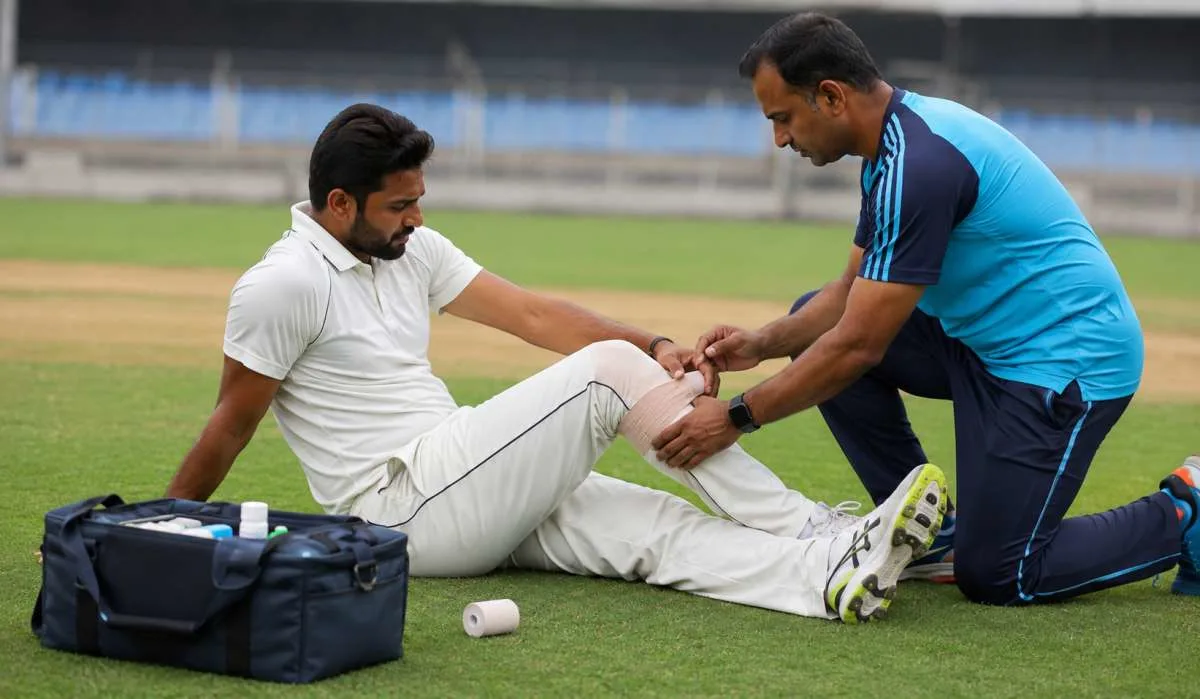
Cricket looks calm from the outside. But it is brutal on the body. Fast bowlers wreck their lower backs. Batters get hit by 90-mile-per-hour balls. Fielders dive on hard ground. Wicketkeepers crouch for hours. The body takes a pounding. That is why sports medicine for cricket players is a big deal now.
Teams have full medical teams. Physios, doctors, and nutritionists all work together. The game is faster now. Twenty20 cricket changed everything. Players push harder. Injuries happen more often. Sports medicine for cricket players covers all of it. Stress fractures. Concussions. Hamstring pulls. The new ICC rules on head injuries too. Every player needs to understand this stuff. Here is what you should know.
Why Cricket Needs Its Own Sports Medicine?
Cricket is different from other sports. It has long periods of standing followed by explosive bursts of action. Fast bowling is one of the most unnatural movements in sports. The human body is not designed to run in and throw your arm over at high speed 50 times a day.
The game has changed too. Twenty20 cricket is faster. Players are more aggressive. Injuries are more common. This is why sports medicine for cricket players has become a crucial part of the game. Teams now have full medical staff. They have physios, doctors, nutritionists, and psychologists all working together .
Read More: Can Sports Medicine Help With Chronic Back Pain? Real Treatment
The Most Common Cricket Injuries
Cricket may be non-contact, but the injuries are real. Here are the most common ones that sports medicine for cricket players deals with :
- Lumbar Spine Injuries
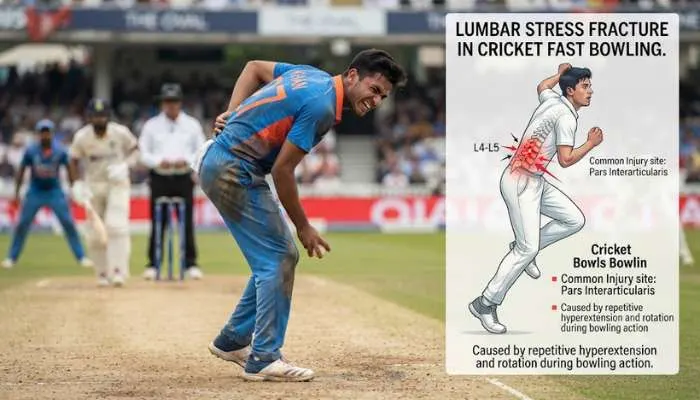
Fast bowlers take the biggest hit. Their lower backs face extreme rotational forces. This leads to stress reactions, facet joint irritation, disc problems, and stress fractures . Lumbar stress fractures are so common that they are called the "signature injury" of bowlers . It can take between 7 and 11 months to return to professional cricket after surgery for a lumbar stress fracture . - Shoulder Injuries
Fielders and bowlers put heavy strain on their shoulders. Rotator cuff tendinopathy, labral tears, and AC joint irritation are common . Even with good bowling mechanics, the shoulder is still at risk of labral tears . - Hamstring Strains
Batters sprinting between wickets and fielders chasing balls pull their hamstrings often . These are among the most frequent lower limb injuries in cricket . - Side Strains
Rotational power is key in both batting and bowling. Oblique and intercostal muscle strains happen when that rotation is too much . - Knee Injuries
The demands of landing, pivoting, and sprinting put pressure on knees. Patellofemoral pain, meniscus tears, and ACL-related injuries occur . Former elite cricketers have a higher prevalence of knee osteoarthritis compared to the general population . - Ankle Sprains
Sharp fielding movements and unstable landings cause inversion sprains . The ankle is vulnerable throughout the game. - Wrist and Hand Injuries
High-impact catches, bat vibrations, and awkward ball contact cause fractures and sprains . Hand fractures are one of the most prominent injuries in the game . - Elbow Injuries
Powerful, repetitive bowling forces cause medial elbow strain and stress injuries . - Foot and Heel Pain
Extended play and abrupt direction changes cause plantar fasciopathy and stress fractures .
Different Positions, Different Injuries
Sports medicine for cricket players has to look at positions differently. Each role has its own injury profile .
- Bowlers have the highest risk of lower back injuries. The explosive power of bowling strains the back, shoulders, and hamstrings.
- Batters are most at risk from being hit by the ball. They can suffer bruises, fractures, and concussions. Prolonged batting also strains the lower back.
- Wicketkeepers get hand and finger injuries from catching fast balls. Repeated crouching strains backs, knees, and thigh muscles.
- Fielders get shoulder injuries from diving. They get hand injuries from misjudged catches. Ankle, knee, and leg injuries happen while chasing balls.
The Cricket Sports Medicine Book: The Ultimate Resource
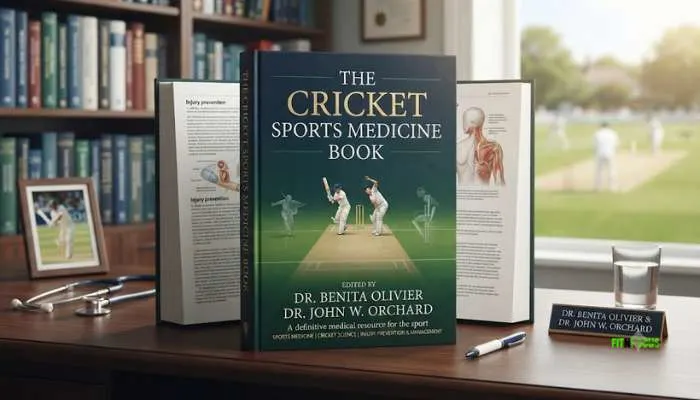
There is now a definitive resource on this subject. The Cricket Sports Medicine book was published in 2025 . It is edited by Dr. Benita Olivier and Dr. John W. Orchard . Dr. Orchard is the Chief Medical Officer for Cricket Australia .
This is the first book of its kind. It brings together leading experts from around the world. It covers everything from injury epidemiology to biomechanics . It has sections on fast bowling biomechanics, fielding biomechanics, and wicketkeeping biomechanics . It is an essential resource for any doctor, physio, or trainer working with cricketers .
Best Sports Medicine for Cricket: What to Look For
If you are a cricketer, what does best sports medicine for cricket look like? Here is what you need :
- Pre-season Screening
A proper assessment before the season starts. This identifies weaknesses and areas of risk. - Strength and Conditioning
Targeted exercise programs to build strength in injury-prone areas. This is crucial for fast bowlers who need core stability and shoulder strength. - Load Management
Monitoring how much bowling, batting, and fielding you do. Overuse is a major cause of injury. - Hands-on Treatment
Physiotherapy for existing injuries. This includes manual therapy, dry needling, and other techniques. - Proper Technique
Learning and practicing correct bowling and batting technique. This reduces stress on joints and muscles. - Protective Gear
Helmets with facemasks, pads, gloves, and proper footwear . This equipment prevents serious injuries. - Rest and Recovery
At least one full rest day each week. Don't play through pain .
Medicines and Treatments Used in Cricket Sports Medicine
Sports medicine for cricket players is not just about pills or injections. It is about prevention, rehabilitation, physiotherapy, biomechanics, and load management. But here are some common medicines and treatments used in cricket:
| Type | Examples | Use |
|---|---|---|
| Pain Relievers | Paracetamol, Ibuprofen | For mild to moderate pain from muscle strains or joint soreness |
| Anti-Inflammatories | Naproxen, Diclofenac | To reduce swelling in joints, tendons, and muscles |
| Muscle Relaxants | Baclofen, Tizanidine | For severe muscle spasms in the back or hamstring |
| Topical Gels | Voltarol, Deep Heat, Icy Hot | Applied directly to sore muscles or joints for relief |
| Corticosteroid Injections | Cortisone, Prednisolone | For severe inflammation in joints or tendons (used sparingly) |
| Local Anesthetics | Lidocaine | For numbing pain during matches or training (only when medically necessary) |
| Antacids | Omeprazole, Pantoprazole | For digestive issues caused by stress or travel |
| Rehydration Salts | ORS, Dioralyte | To replace fluids and electrolytes lost in sweat during long matches |
| Antibiotics | Amoxicillin, Ciprofloxacin | For infections, skin wounds, or post-surgery care |
| Antihistamines | Cetirizine, Fexofenadine | For allergies that affect breathing or skin during play |
| Supplements | Electrolyte tablets, Creatine | To support hydration and performance under medical supervision |
| Supplements | Vitamin D, Calcium | For bone health, especially important for fast bowlers |
You May Also Read: Sports Medicine vs Physical Therapy: What is the Difference?
ICC Medical Diagnosis and Protocols
The ICC has strict medical guidelines. The ICC medical diagnosis protocols cover everything from concussion to pregnancy return-to-play.
- Concussion Protocol
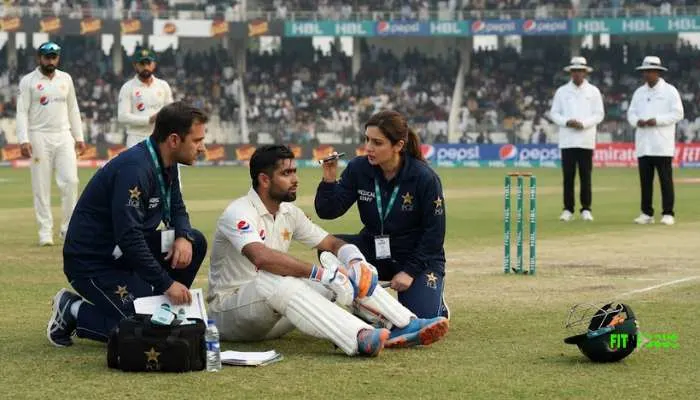
The ICC has specific guidelines for concussion . If a player takes a hit to the head or neck, medical staff do an on-field assessment. They look for symptoms like dizziness or headache. They check if the player is responding normally. They check for a dazed appearance . - If there are concerns, the player is taken off for a SCAT assessment. This is a standard concussion evaluation tool. But here is the important part. 10-20% of concussion cases have delayed onset. So players must be monitored for 48 hours after any significant head trauma .
- Post-Pregnancy Guidelines
In 2026, the ICC released its first-ever post-pregnancy return-to-play guidelines . Dr. Philippa Inge led the drafting of these guidelines. They follow a six "R's" framework: Ready, Review, Restore, Recondition, Return, and Refine .
The guidelines are based on IOC and FIFA advice. But they have cricket-specific elements. They cover things like how to train during pregnancy, what skills to integrate and when, and the practicalities of breastfeeding and travel . This is a major step for women's cricket.
Preventing Injuries: What Players Can Do
The best sports medicine for cricket players is prevention. Here is what you can do :
- Build strength, endurance, and flexibility before the season starts.
- Wear protective gear every time you play. Check that it fits properly and is in good condition.
- Learn and practice proper technique. Bad technique leads to bad injuries.
- Warm up and cool down before and after every session.
- Balance training with rest. Take at least one full rest day each week.
- Don't play through pain. Tell your coach or parent if something hurts.
Summary
Sports medicine for cricket players is about understanding the game and its demands. It covers injury prevention, diagnosis, and rehabilitation. It includes everything from the Cricket Sports Medicine book to ICC medical diagnosis protocols. From lumbar stress fractures to concussion management.
Cricket is a tough sport. But with the right medical care, players can stay healthy and perform at their best. Whether you are a fast bowler, a batter, or a wicketkeeper, sports medicine for cricket players is there to keep you on the field.
FAQs
1. Which injuries happen most in cricket?
Fast bowlers get back injuries. Batters get hit by the ball. Fielders hurt their shoulders and ankles. Wicketkeepers get finger problems. Hamstring pulls are common for everyone.
2. Why are fast bowlers always getting hurt?
The action is hard on the body. The lower back takes a lot of force. Stress fractures happen often. Recovery can take almost a year.
3. What is the Cricket Sports Medicine book?
A new book from 2025. Two top doctors put it together. It talks about cricket injuries and how to treat them.
4. What does the ICC do for concussions?
Medical staff check players on the field after a head hit. They look for signs of trouble. If they see any, the player comes off. They have to be watched for two days.
5. How can players stay healthy?
Get in shape before the season. Wear gear that fits. Use proper form. Warm up and cool down. Rest one day a week. Do not play if you are in pain. Tell your coach if something is wrong.
.